Weak savings, declining investment constrain Kenya’s job growth - report
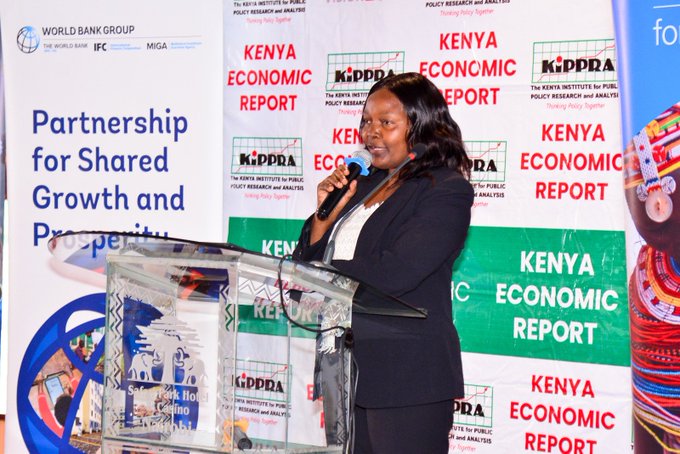
The Kenya Institute for Public Policy Research and Analysis (Kippra) warns that weak domestic savings are widening structural constraints in the economy, limiting investment and contributing to slowing employment growth.
Kenya’s ability to generate jobs is increasingly under pressure as the country struggles to save enough to support productive investments, a report has said.
Dubbed "Kenya Economic Report 2025" by the state-owned research firm, Kenya Institute for Public Policy Research and Analysis (Kippra), it warns that weak domestic savings are widening structural constraints in the economy, limiting investment and contributing to slowing employment growth.
More To Read
- Credit growth slump tightens finance access, raising concerns for jobs and expansion
- Kenya’s economic recovery not translating to quality jobs, report finds
- Kenya’s tax system narrows inequality but pushes more people into poverty - report
- FAO index shows decline in global food prices, except cereals
- Over half of circular economy workers lack protection, ILO report finds
- Parliament moves to protect consumers from exploitative agreements
The government mobilises savings through several avenues, including domestic revenue collection such as taxes on income, consumption, and corporate profits, as well as social contributions like pension schemes.
It can also raise funds by issuing government bonds and treasury bills to both institutional and retail investors, encouraging public participation in financing national projects.
Other avenues include leveraging state-owned enterprises’ retained earnings, encouraging voluntary savings schemes, and creating development funds that pool resources from citizens, diaspora remittances, and private-sector contributions to support targeted investments and infrastructure projects.
Kippra reveals that the country’s gross national savings have remained largely stable but subdued.
In 2024, savings declined marginally to 16.0 per cent of GDP from 16.1 per cent in 2023, remaining below the 2021 peak of 16.5 per cent.
This stagnation highlights the limited capacity of households, firms and the public sector to mobilise sufficient resources for investment-led growth.
Investment levels, however, have followed a clearer downward trend.
Total investment fell from 19.0 per cent of GDP in 2019 to 17.5 per cent in 2024, signalling reduced capital formation across key sectors of the economy.
“The declining trends in employment growth mirror the declining trends in investment,” the report notes.
As a result, Kenya’s savings-investment gap has narrowed in recent years, shrinking from 4.9 per cent of GDP in 2019 to 1.6 per cent in 2024.
However, Kippra cautions that this improvement does not reflect stronger savings performance.
Instead, it is largely the outcome of declining investment, raising concerns about the economy’s future growth potential.
“The improvement in the savings-investment gap is due to a decline in investment rather than a substantial increase in savings.”
The persistence of an SI gap nonetheless indicates that domestic savings remain insufficient to finance new investments, compelling the country to turn to external capital inflows to sustain economic activity.
While foreign financing can help plug funding gaps, the report warns that heavy reliance on external resources exposes the economy to heightened risks.
It reckons that volatility in exchange rates or shifts in global investor sentiment can quickly destabilise growth prospects, undermining both investment planning and employment outcomes.
Employment data reflects these pressures. Total employment growth slowed from 4.9 per cent in 2019 to 3.9 per cent in 2024, excluding the sharp contraction of 2020 caused by the Covid-19 shock.
Top Stories Today